Tuesday, May 17, 2011

Revise Us Again: A Review

Revise Us Again: Living from a Renewed Christian ScriptMy latest offering from the Speak Easy bloggers network was "Revise Us Again" by Frank Viola.  In this book Viola is seeking to look at a few thoughts and behaviors of those in the church and encourage us to put them under revision.  I do not feel that this is written in a malicious way or in a way that seeks to prop Viola up as holier than thou.  Instead I feel that through this work Viola is wanting the church to fully examine all that they do and ask how what we do and think brings glory to Christ and supports our mission.  Here are the issues that he brings up in this book.

  • Revising our awareness of the Divine
  • Revising Christian code language
  • Revising the Holy Spirit's Ministry
  • Revising Christianeze
  • Revising the Lord's voice
  • Revising Our Spiritual Expectations
  • Revising Our Attitudes
  • Revising Our Chief Pursuit
  • Revising Our Message
  • Revising Our Semantics
Most of these issues are approached in a tongue in cheek manner that reminded me a little of reading a post from "Stuff Christians Like."  But Viola moves past the humor and gets to an honest look at what harm or damage is produced from these areas that need revising.  If you have read any of Viola's work recently, you know that he is very concerned about how we are lifting up Jesus and many of these revisions will lead to the church lifting up Jesus in a more complete way than before.  One of the strengths of this work is the personal experience that Viola has had in being a part of many different denominations and Christian groups.  He does not discount the work that God is doing in each group in light of these needed revisions, but still celebrates the things that he learned from each group.

All in all I found this to be a very easy read that also challenged me to rethink some of my own thoughts and behaviors around those in church.  I think this book would best be digested in a small group setting as it definitely lends itself toward good dialogue.  What would be more interesting is to read this in an interdenominational setting as different backgrounds would take the revisions in their own unique way.

Lastly, I want to give credit to the graphics department for the design of the cover of this book.  I know it is simple but for some reason I love the idea of having a yellow legal pad as the design for this book.  I guess that comes from one too many meetings at church where ideas are made and then revised or scrapped based on the collaboration from those in the meeting.  Anyways, for what it is worth I love the cover.

Tuesday, May 3, 2011

A faith that needs to be Unleashed

My latest BookSneeze offering is "Unleashed" by Erwin McManus.  In this book McManus is spreading the message that God desires for his people to live with an untamed faith.  By this he means a faith that is not civilized and scared but instead one that is bold and willing to take risks.  Throughout the book he weaves in personal stories of his family and how they have set out on what he calls the barbarian way.  He mostly takes cues from his daughter and wife, but throws in stories about his son and himself as well.  His main point is that too often we have been bound to what is supposedly the "correct" way to live a Christian life, but in truth trying to follow this way has caused many people to lose their ability to recognize the promptings of the Spirit.  Here's a sample quote on this thought.  "Perhaps the tragedy of our time is that such an overwhelming number of us who declare Jesus as Lord have become domesticated - or, if you will, civilized.  We have lost the simplicity of our early faith.  Beyond that, we have lost the passion and power of that raw, untamed, and primal faith."

All in all I think this is a great book and would recommend it to anyone.  The writing is very engaging and accessible.  In fact I almost felt like the four chapters were four sermons in a series.  You can tell that McManus is that type of communicator and it works well.

Friday, April 29, 2011

Radical Together: A Review

Radical Together: Unleashing the People of God for the Purpose of GodRadical Together, by David Platt, is a continuation of his previous work titled Radical. The message of both books is very similar with the difference being in to whom the message is intended. Radical was intended to shake up the faith of the individual in light of what the gospel says to the American Dream. Radical Together is intended to shake up the faith of the church and to encourage them to live out this radical faith in community together. I believe that the strength of Platt's message is found in the stories of those from his church who are living this out. Platt is not just talking in ideas and dreams but in how real lives have embodied these ideas and dreams. I believe that this is a very inspirational book that also asks very important questions to the church in America today. I admire the courage that it takes to go against the flow of American Christianity and be a "voice in the wilderness," but there is a certain level of credibility that comes from pastoring a large church that is faithfully living out this message.

I would definitely recommend this book for everyone. The writing is very engaging and the message is one that needs to be pondered by all Christians. I would encourage everyone to read Radical first in order to fully grasp the totality of the message. There are six sessions of small group discussion questions at the end of the book that would prove to be very helpful for such a group to talk through the message of the book. I pray that the church in America could become radical together for the gospel in the world.

I received this book for free from WaterBrook Multnomah Publishing Group for this review.


Wednesday, April 6, 2011

If Darwin prayed

If Darwin Prayed: Prayers for Evolutionary MysticsIt is not too often that I come across a book that baffles me theologically, but my latest offering from the Speak Easy network did just that. "If Darwin Prayed" is a collection of prayers that are written for use in the liturgical worship of the church by a pastor in Vancouver in the United Church of Canada.  The book is laid out well and divided up by the various seasons and special Sundays in the liturgical calendar.  Each section contains a brief overview of the theological emphasis that particular season or Sunday is to use.  The prayers are beautifully written and each has the scripture reference that was used in crafting each prayer.  I believe these prayers would work well in both a corporate and personal setting.

Now to the theology.  I think was most baffled by the total acceptance of Darwin's theory of evolution in the theological framework of these prayers.  I do not consider myself to be fiercely conservative in the debate between creation and evolution, but I have never come across a total acceptance of the evolutionary theory in Christian thought.  It does seem that process theology is the most prominent influence and I will admit to just a basic understanding of the intricacies found in process theology.  I think I was most caught off guard at how all of creation was regarded in the same light.  There was no one part more important than the other.  Here's a sample quote in the introduction.

What if our image of God were informed by evolution as both a biological and spiritual impulse?  The great story of the universe reveals that there is no disconnection anywhere in the universe.  We are cousins with the stars, giraffes, amoebas, bananas - let alone monkeys!  We share an unbroken lineage with all of life.  To modify the central image of Jesus' teaching, we are kin with all that is in the kin-dom of God.  This is a stunning revelation.  Mystics has intuited it, but now science has revealed it to be fact.  We share a single energy with every form and every mode of consciousness in the universe.  This knowledge should be the cause for great celebration in our churches every Sunday and in our prayer life throughout the week.
There is a certain beauty to the harmony of creation that is painted but I don't know if I'm ready to fully go there just yet.  There are biblical passages that point to the elevated status that humans have in creation and I would be curious how these are interpreted in this theological framework.   There are many other similar questions that arise theologically and because of that I would urge those interested to be open to new ideas or well versed in this theological framework to appreciate what is being attempted.

Thursday, March 31, 2011

The Corruptible

The Corruptible: A Ray Quinn MysteryI will have to admit that I am a sucker for a good mystery book.  I found "The Corruptible: A Ray Quinn Mystery" to be just that, a good mystery book.  It wasn't great, but it wasn't bad either.  I didn't get bored with this book, but it did move at a fairly slow pace for a mystery book.  Part of that may be due to my love for TV shows of the same genre that move quickly and take several episodes or seasons to develop their characters.  This is the second book in a series, and I have not read the first one, so there may be some background information that I am missing.

The basic premise of the book is centered around an ex-cop, Ray Quinn, who was injured in the line of duty and now is working as a Private Investigator.  His carrer as a PI was helped by a previous case that he helped to solve and now afforded him certain perks as a consultant with the police force.  His partner is a wanna be cop by the name of Crevis, who is good hearted but cannot seem to pass the written cop exam.  Ray is hired to recover some stolen materials by a very wealthy investment firm that is run by Armon Mayer.  Ray is told that he was hired because the suspect was a dirty ex-cop, Logan, who had been working as a security guard for Mayer.  As Quinn begins his search Logan is found dead with the stolen goods no where to be found.  Quinn finds himself working alongside the police force in both the murder investigation as well as his own investigation into the stolen goods.  The case seems to go round and round while running into many dead ends but Quinn does end up solving the case in the end, which as it turns out was an inside job for the theft and a revenge of sorts for the murder.

With this being a "Christian" mystery novel there is a hint of evangelism  on the part of one of the characters who desires to help Ray.  In the end Ray does finally start listening to her and begins a journey toward sobriety that the author leads open for subsequent books.

All in all this was a good read.  There were a few things that seemed unbelievable from time to time, but I chalk that up to a work of fiction.

I received this book for free from WaterBrook Multnomah Publishing Group for this review.

Wednesday, March 16, 2011

The Nature of Love: A Theology

In The Nature of Love: A Theology, Thomas Jay Oord sets out to construct a theology that features love at its center.   While this doesn't seem like an incredibly novel idea, I think that as one digs deeper into this stream of thought they will begin to understand that too many of our theologies put love as one of the many attributes of God.  But for Oord this is the essential understanding that we should have of God.  One of the first problems that arises from this line of thinking is how do we define love, especially in light of how our culture has distorted the meaning of this word.  The working definition that Oord uses is as follows, "to love is to act intentionally, in sympathetic/empathetic response to God and others, to promote overall well-being."

With this working definition in hand Oord turns to the biblical witness of love and reframed my understanding of the three Greek words that we translate into love: agape, philia, and eros.  I had always thought that agape (self-sacrificial love for the good of the other) was the best understanding of biblical and Godly love.  But Oord redefines agape as "loving responses to evil" and notes other instances where the biblical writers not only use the terms philia and eros but also use agape to express the concepts of philia and eros.  Not being someone who has studied Greek I will take Oord at what he says here and have to rethink and study up on these concepts and uses of love in the New Testament.  Beyond my own discovery in this area I really loved the landing point of Oord on understanding the full meaning of saying that God is love.  "Not only should contemporary Christians embrace agape, eros, and philia as legitimate forms of love for creature to express, but they should also accept the biblical witness that God expresses these forms of love.  Rather than one-dimensional, God's love is full-orbed" (52).  This opens us up to understanding God in terms of relationship and also how we as creatures are able to act in ways that are loving.

This in turn leads Oord to make the case that a theology of love affirms open theism.  This is due to the picture of a relational God that open theism paints in contrast to the 'totally other' God of classical theism.    I appreciate the emphasis on relationship that open theism paints between God and creation but I will admit that I got a tad lost in the discussion on theodicy.  I understand the basic assumption that open theism helps to explain away the culpability of God in view of the freedom that God has given to creation but Oord's assertion that creation ex nihilo is both unbiblical and wrong still has me thinking.  I can totally see where it is an idea that is not fully supported by the biblical witness, but I am struggling with this idea that something existed apart from God in the beginning and how God will redeem that something without being at least a little coercive.  Any help here would be appreciated.

Oord finishes the book with a fleshing out of what he calls Essential Kenosis which means that it is essential in God's nature to come near to creation in love (well being).  This was modeled by Jesus and is pointed to in the New Testament writings.  Ultimately the picture of essential kenosis is one of hope that God, and love, will win in the end.  I appreciate the full picture of love, God and eschatology that essential kenosis presents to us but I still feel like I've been drinking from a fire hydrant as I process this idea.

All in all I enjoyed this book and would recommend it.  I understand that not all will receive this view well but I feel that there are very good thinking points made by Oord in this book.

I read and reviewed this book as a member of the Speak Easy bloggers program.

Monday, February 21, 2011

Hope with the Next Christians

The Next Christians: The Good News About the End of Christian AmericaWhen observing the Christian landscape in America today it is easy to get disenfranchised.  It is pretty obvious that the world as we know it is changing and that the church is trying to figure out how to faithfully present the gospel in this new world.  And you might imagine, this is taking on different looks depending on where one is trying to minister.  Thankfully we seem to be moving away from a cookie cutter ten step process in how to grow a mega church with the end result being more fannies in the seats to a holistic look at how we make actual disciples that will make a difference in the world.  In "The Next Christians," Gabe Lyons is describing what this latter emphasis looks like.  Instead of being bogged down by the intricacies of post modernity and how it may or may not affect our theology, Lyons is taking a look at how many present day Christians are living, moving and having their being in the world.  He brings up how many of the outlooks of Christians today have changed from those of generations past, especially in how they choose to engage the world around them.  They seek to be agents of restoration in the world who join God in the work that is already being done in and around them.

I really enjoyed not only the content of what Lyons had to say, but also the stories of those who are actually living out being an agent of restoration.  I felt this offered the most tangible form of hope because these shifts in lifestyle are not just good theories but realities for those who are seeking to follow God in this way.  Their stories offer a way forward to those who would choose to follow God in the same manner.  I would hope that as this book is read that it peaks our imagination to what our life with God could be like and where we can join in the work that God is already doing.  I hope that my story can one day be found in the pages of "The Next Christians" and that as a minister I have been able to help others do the same.

I received this book for free from WaterBrook Multnomah Publishing Group for this review.  

Saturday, January 29, 2011

The Lion, the Mouse and the Dawn Treader

The Lion, the Mouse, and the Dawn Treader: Spiritual Lessons from C.S. Lewis's NarniaEver wanted a spiritual take on C.S. Lewis' The Voyage of the Dawn Treader, then The Lion, the Mouse and the Dawn Treader is for you!  In this book Carl McColman takes an deeper look at the spiritual implications found in each chapter of the Dawn Treader.  Thankfully McColman does a great job summing up the plot line as I have not read Lewis' book in a few years.  I thought this book was very well written and easy to understand.  I also felt that there was a cliff notes kind of feel to this book in that each chapter was summed up and then the spiritual lessons were expounded upon.  This format helped to further the message of the book especially since there were a few spiritual lessons that I was unfamiliar with, namely those with a mystic point of view.  All in all I learned quite a bit from this short book and would easily recommend it to those wanting a deeper look at The Voyage of the Dawn Treader.


Thanks to the Speak Easy network for a copy of this book to review.  

Saturday, January 22, 2011

Looking for an audacious faith?

In "Sun Stand Still" Pastor Steven Furtick challenges us to develop an audacious faith.  I was a little skeptical at first as to where this might lead, but upon reading his book I wholeheartedly agree.  Furtick is taking the basis of his book from the story of Joshua.  Joshua had the pleasure of leading the people of God after Moses had died, a task that I'm sure not too many envied.  But Joshua was the leader that was able to lead the people of God into the promised land after wandering in the desert for forty years.  During one of the many battles that he lead the army into, he had the audacity to pray that God would make the sun to stand still in the sky, and God granted this request which allowed Joshua and his army to gain victory.  It is this simple prayer that Joshua prays that Furtick uses to awaken his reader to the promises that God wants to unleash on His people.  This does not refer or in any way mimic the slick packaging of the prosperity gospel, but instead Furtick is concerned with how the people of God can make a difference in the world around them.

I think the strength of this book is found in the ease and clarity of the writing and the stories that Furtick shares of those in his church that have prayed Sun Stand Still prayers in their lives and how God answered them.  I really appreciated his emphasis at the end of the book on how the journey is just as important as the destination and that getting to the destination is always a process.  It is easy to read a book like this and then get caught up in the success stories and lose sight of the process and journey that it took to get there.  There are many resources on the website for the book that will help with small group discussions and other messages from the author.

On a personal note, one of my best friends from college attends Elevation church in Charlotte and has nothing but positive things to say about his church and the work they are doing in the Charlotte area.  If the basis of the ministry of Elevation church is founded in the frame of mind that this book portrays I can totally see why this is the case.  I believe there are even greater things in store for this pastor, his church and those who will join in the movement of God with an audacious faith.

I received this book for free from WaterBrook Multnomah Publishing Group for this review.

Friday, January 14, 2011

The Jesus Inquest

 My latest read from the BookSneeze bloggers program was "The Jesus Inquest" by Charles Foster.  Foster is a barrister (lawyer) in England and he presents two sides to the resurrection through the eyes and arguments of two fictitious barristers (X and Y).  The format of the book is that X presents evidence opposing the truth of the resurrection and Y rebuts the evidence.  This format helps to keep the main arguments on topic and not going off in the many different rabbit trails that this subject matter could lead one down.  I thought this book was very well written and easy to understand.  It exposed many new theories about the resurrection, mainly against, that I had not previously been exposed.  Some of these theories were really far fetched and some of them made logical sense, but they were contrary to what is found in scripture.  It was also interesting to read an apocryphal New Testament writing, the gospel of Peter, and to learn the similarities and differences from the writing found in the canon.

All in all I thought this was a great book and would have no problem recommending it to people.  It was an easy read and not very long.

Wednesday, December 29, 2010

Fasting

My latest book from the Book Sneeze bloggers program is called "Fasting" by Scot McKnight.  While this might seem a curious title to read around the holidays, I did enjoy reading the e-book version on my new Kindle.  This is the fourth title that I've read in the Ancient Practices series and probably one of my favorites.  I really love McKnight's writing style and how he weaves in teaching about the ancient Jewish understanding of his subject as well as the early church understanding and how it has evolved over time.  As an associate pastor, I have often taught on and lead groups through various fasts, especially through the season of Lent.  But after reading McKnight's book I have a slightly different take on fasting.  Most of that is through his assertion that fasting, in the Biblical sense, can only be defined as refraining from food and/or water.  He made the distinction of abstaining from certain things (caffeine, TV, etc) is not really a Biblical fast.  Probably the biggest revelation for me is his central thesis of how a fast "works."  I put works in quotations because fasting is not some formula that we plug certain things into and then expect a certain result from God, although many do feel that way.  McKnight brought to my realization that fasting is a response from a God event, where the one experiencing the event is moved to repentance and a further longing for connection with God, and in some cases there is a result that does occur.  He diagrammed this as a movement from A > B > C.  Of course there is more to his point and I will leave that to the book to explain.  I would definitely recommend this book.

Friday, December 24, 2010

Chazown

Chazown: Define Your Vision. Pursue Your Passion. Live Your Life on Purpose.The latest book that I have had an opportunity to read is "Chazown: Define Your Vision. Pursue Your Passion. Live Your Life on Purpose." by Craig Groeschel.  I picked this book for two reasons, the first is the unique title and the fact that I am interested in Hebrew concepts of the faith (which this book really did not address) and second I have never read anything by Groeschel.  As you can probably guess from the subtitle, this book is about finding the purpose for your life.  I had expectations of this being a somewhat dense book that delved into the dense fabric of a spiritual life and instead what I found was a very practical and easy approach to life.  At first I was put off by the simplicity, but as I reflected on what Groeschel was presenting and how I have heard it talked about previously; I really appreciated the simplicity.  As someone in vocational ministry I have talked to many people about this topic and am amazed at the many different approaches that people take to find meaning or purpose.  What I like the most about this book is how he emphasizes that our purpose is largely wrapped up in how we have been gifted by God and what passion God has instilled in each of us.  I also appreciated that Groeschel believes that living a life in balance is key to this whole thing working.  I don't want to give away the content of the book because you should really read this book.  It is easy to understand and well written.  I would suggest that this book is most effective if read through in community.  The sections of the book lend themselves to discussion and most importantly, accountability.

I received this book for free from WaterBrook Multnomah Publishing Group for this review.

Tuesday, December 14, 2010

Revelation of the Magi

I recently had an opportunity to read "Revelation of the Magi" as a part of the Patheos Book Club roundtable.  I was very intrigued by this title because of the subject matter of the Magi.  We really do not have many resources on who they were and what the meaning of their presence in the story of the birth of Christ represents.  But here is a seemingly lost account of Magi.  The author, Brent Landau, found this writing stored away in the vaults of the library at the Vatican and now he has translated this ancient document into English for the very first time.

The book opens up with a very long introduction where Landau summarizes the story by hitting the high points of interest that are found in the story.  Some of those high points include a better understanding of who the Magi are (a religious group in the East who are descended from Seth, the third son of Adam and Eve), what their religious practices were (they prayed silently and were waiting for a sign that God would send), where they were located (the land of Shir, somewhere in the East), what caused their journey (they saw a light enter their sacred cave and were told by Jesus to travel to Jerusalem to find him and worship him), the experience of their journey (they were guided by a light and found that the terrain was leveled and their provisions were constantly replenished), their experience with the child (they were commissioned to spread the news of God's work of salvation to their people), their arrival home (journey home similar to the one to Bethlehem, but upon arriving home they fed people the food from their sacks and had their eyes opened to this new reality), and finally the experience of the apostle Thomas (he baptized the people and then Christ descended from heaven and served them communion).  There are a few other things in the story, but I do not want to ruin everything for you.

All in all I found this a very fascinating read.  I will admit that I do not have much knowledge when it comes to apocryphal writings, so I cannot comment on some of the texts that Landau references in his notes.  Coming from a protestant, evangelical perspective I do not have a very good frame of reference when it comes to texts not found in the canon of scripture.  Thankfully I am in a place of asking those questions, but it is a place where I am treading carefully.  So one question that I would have for the author is where would one begin in trying to discern the place that the apocryphal writings have in the formation of our faith and understanding of scripture?

Another question that I have been wrestling with is connected to Landau's conclusion that this text has something to say about religious pluralism.  If I understand him correctly, he believes that this is evidence that God has spoken in the past to groups other than the Jews.  While I do not doubt this, especially with a firmly held belief of prevenient grace that I as a Wesleyan hold on to, I for some reason do not see how this would lend itself to a speaking on religious pluralism.  From what I could tell the message to the Magi was pretty much an explanation of the gospel as we know it today.  How does what we see in this text inform us as to how God might be speaking to those of Islam or Hindu faith?  I ask this question with a limited understanding of the position of those with a robust understanding of religious pluralism, but my curiosity is peaked.

Finally, my last question is about the Magi themselves.  Is there any reference to them in history past this document?  Did they get swept up into Christian missionary movement to the East to the point where they lost this historical identity as a people?  Or is their mention of them in other early Christian writings out of the East that speak of this particular group of people?

Monday, December 13, 2010

Chasing Francis

You know how sometimes you read a book and it just resonates deep inside of you?  Well "Chasing Francis" is one of those books for me.  I cannot recommend this book enough.  The basic plot line of this book is of a mega church pastor who finds that the faith that he has built his life upon is crumbling around him.  Essentially the author is describing a person moving from a modern faith worldview to a post-modern faith.  This change culminated in an extremely honest moment from the pulpit that had the pastor in trouble with the elders and other staff at the church.  He ends up taking a leave of absence and joins his uncle in Italy who is a Franciscan monk.  During his time away he gives himself over to studying who Francis of Assisi was and how he lived and taught others to live.  In doing so he began to discover a new way to be Christian that was not so much about how big a church he could grow, but how he could truly serve the world around him.  He eventually has to return home and face the music but with a new vision of what his local church could become.  Predictably it does not end with the whole congregation changing, but with the pastor forming a fellowship to walk out his latest discovery.

I think I enjoyed this book so much because I can identify with it.  I have gone through a transition in my faith but yet I still find myself in the midst of those stuck where I used to be.  It can be frustrating at times but I very much liked the discoveries that were made from the life and teachings of St. Francis.  This novel has really peaked my interest in learning more about what Francis wrote and trying to figure out how our current ministry contexts can implement his message.

I read this book as a part of the Speak Easy bloggers network and hope to read more great titles in the future.  Go get this book!

Thursday, December 2, 2010

Thoughts on the empire

Just to be clear up front, this is not a Star Wars post about the empire.  I'm preaching this weekend on Jesus and the empire in power when he was born.  My message fits into a broader look at the Christmas story and how we have lost some of the deep meaning found in this revolutionary story.  But as I've been thinking about my message this weekend, I am wondering if people understand the concept of an empire being in control.  We live in a free democratic society where one simply has to wait out a leader they don't care for, because history shows that our leadership pendulum never stays with one party/viewpoint for too long.  But what was it like to live in a time where you did not have a say whatsoever in who would rule over the land?  What was it like to live in a time where disagreement with the King could cost you your life?  And how radical is it that the Kingdom of God is good news for all people and that it will bring a peace where swords are beat into plowshares?

I find myself challenged to see this Advent season in the light of this already here but still coming Kingdom of God.  I feel challenged because it seems that we have turned the Christmas story into this nice and neat little story that makes us feel good for the weeks leading up to December 25th.  But the Christmas story is so much more than something that makes us feel good.  It is God's pronouncement that there is another way to live in the world.  This way is of peace and righteousness that bring life and light to the world.  It is a call to come out of the way of the world and into the way of God.  May our eyes be opened to see that the kingdoms of the world are not the Kingdom of our God and may we eagerly await the final consummation of God's Kingdom here on this earth.

Friday, November 19, 2010

The Gospel According to Jesus

 The most recent book that I have read through the book sneeze program is "The Gospel According to Jesus."  It is written by Chris Seay, who is the founding pastor of Ecclesia Church in Houston.  I know that there are a lot of books going around on the subject of the gospel, but I thoroughly enjoyed this book.  The thing that I most appreciated is that Seay talked about the gospel in holistic terms.  Too often we only speak of the gospel in terms of salvation in the end and we miss out on the implication of what God wants to do through us in the here and now.  Coming from a holiness denomination this is a very frustrating view that I hear all too often.  But Seay reminds us that the gospel is also about joining in what God is doing in the world around us.  His book is a call for us to wake up and join in this very work.  This is not a works based social gospel, which I'm sure some are accusing him of promoting, but a call to understand that God has called us for a purpose in the here and now.

This is a very easy read and could easily be used in a small group setting.  I believe that Seay writes in a way that not only makes his point, but also nudges you to think beyond his point.  This is a call for the community of the people of God to dream about what God can do and for us to get out of our church buildings and actually do those things.  Read this book!

Thursday, September 16, 2010

Beyond Opinion

Beyond Opinion: Living the Faith We DefendI have recently read "Beyond Opinion" as a part of the book sneeze bloggers program.  This book is a modern day apologetic of the Christian faith and they are tackling issues that rise from other world religions, atheism and the post-modern paradigm.  I felt that each essay was well constructed and that the authors were successful in stating their case.  I personally am not a huge proponent of apologetics, but do feel that they are an important arm in our understanding of the evangelistic calling that we have as the people of God.  But in saying that I don't think that apologetics are the ultimate answer.  I do however feel that this book is a great resource for a considered response to many of the issues that are challenging Christianity in the world today.  I would recommend this book for someone looking for help in addressing those areas.

Tuesday, August 17, 2010

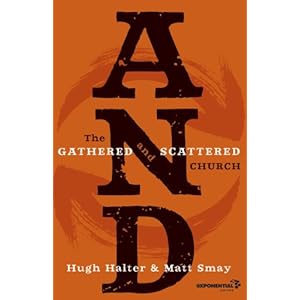
And: The Gathered and Scattered Church

AND: The Gathered and Scattered Church (Exponential Series)I recently finished the book "And: The Gathered and Scattered Church."  I must first apologize to the good people at Zondervan who sent me the book to review.  My only excuse is that ministry life prevented me from completing this on time.

Let me begin by saying that I really enjoyed this book.  I have found myself caught in the tension of the church being a gathering place or a sending place for some time and had never investigated if the two could co-exist.  Most of the people that I have read or heard talk about the subject were in staunch favor of making the hard choice between the two scenarios.  I appreciated the view point of both authors in this book and how both of these scenarios are very important.  I won't go into their argument here, but you should pick the book up and read it for yourself.  I believe this is a good middle ground for us in the church world to consider in shaping the form and function of our churches in light of the mission that God has called us to be about.  A book like this gives me hope that the church can both be a special place in the lives of our congregation and also the place where we discover together the mission that God has for us.

Once again, I highly recommend this easy to read and understand book and encourage you to prayerfully think through what they have to say to the local church.

Tuesday, June 22, 2010

Missing the point

So last week during the closing prayer at our church softball game, one of our members ended the prayer in a very interesting way.  His last line was, and I quote, "See ya on Sunday God!"  Now I should confess that I think opening and closing prayers at church softball games are a joke to begin with, mainly because the one praying usually spouts off some pop theology and something about keeping us free from injury, etc; but this line really made my skin crawl.  And it did so for two reasons.  First, half of our teams players do not come to our church regularly and they play because they are friends of or work for our coach.  So playing with the few of us that do go to the church should be something of a good influence on them, hopefully that is.  I was not surprised to hear one of these guys say to our coach, "Aren't you guys supposed to have like daily interaction with God or something?"  To which I piped in with, "yes, that is the general point."  Which brings me to my second reason, the frustration that some people just don't get it.  We can preach and teach till Jesus comes back, and we probably will, but for some reason people just don't seem to get the point of what we are trying to say.  I guess this is just one way where we can identify with Jesus in those following you do fully grasp your message.  Jesus, grant us the grace we need to serve like you did.

Tuesday, June 1, 2010

Jesus Manifesto

I recently finished reading "Jesus Manifesto" as I got a copy from the BookSneeze bloggers program.  I did enjoy reading this book and felt that the authors did a good job of stating their case.  The writing style is very accessible for any reader and their message is definitely for the church and those who call themselves Christian.  My only minor irritation with the book is that I pretty much knew where they were going after the first few pages, but this book only has one subject in Jesus Christ.

All of that being said, I think this is a timely message for the church to get back to Jesus.  As someone who preaches from time to time and is involved in sermon discussions for our church, I was convicted about how many of our sermons point back to Christ.  I feel that we do a good job of that, but still something to think about.  I also really enjoyed the chapter that they wrote on justice and mercy and how they find their fulfillment in Christ.  I won't go into any detail as to ruin it for you, but I resonated with much of what they said in that particular chapter.

I do believe that Jesus Manifesto is worth a read and I hope and pray that it's message will cause all of us who claim Christ as Lord to really think about if we live as if Christ is Lord in our lives.